Martha Volkov runs a crab boat on the Bering Sea. Paul Engel runs Dutch Harbor. Neither of them is looking for anything. But the ocean has a way of putting people exactly where they need to be, and the tide always comes back.
6I could build something with a man like that. I could also talk myself out of it the way I have talked myself out of everything that matters. The tide is going out. It always comes back.
At two-forty in the morning under Alaska's midnight sun, a wildlife researcher answers a knock on her tent. A stranger stands in the golden light holding one of her banded birds. Twenty-four chapters of two people discovering that some migrations are not about distance.
8He is tall. Standing in the gold light of two forty in the morning with a tern cupped in both hands. Dark hair. Boots that know this ground.
Three years of architectural drafting reduced to two paragraphs and a severance check. Iris Bellamy is not looking at the Minneapolis skyline. She is looking at what comes next. A story about rebuilding — because the fall is part of the route.
10The Minneapolis skyline glittered through the floor-to-ceiling windows, but Iris wasn't looking at the view. Three years of drafting reduced to two paragraphs and a severance check.
Dr. Sloane Merritt has been reading Mount Cassin's caldera vents for years. Then Garrett Holloway walks in, tells her the October data is wrong, and spreads his documents across her table like he owns it. He has been here eleven seconds.
12"Your caldera vent readings for October are wrong." He has been here eleven seconds. "They are not wrong," I say. "They are inconvenient. There is a difference."
A detective story where the case is not the point. James Sullivan works the kind of job where you see everything and trust nothing. Then someone walks in who makes him wonder if the thing he has been investigating is himself.
For everyone who already knows. You are figuring it out.
Claire Harrow has had three names in six months. She testified against a crime syndicate, and now she is nobody in a city she has never visited. But the safe house has a protector. And some people are worth being found for.
16She pressed her palm flat to the cold window of the sedan, watching the city disappear behind streaks of water. Home. The word had lost meaning six months ago.
When a pump seizes on a space station 400 million kilometers from Earth, hydroponics specialist Kira Sato has six minutes before the crew loses its food supply. The engineer who shows up isn't in any manual — but his hands know machines the way hers know roots.
He fixed things nobody else could fix, with parts nobody else would think to use. And he never once pretended the manual had the answer.
When a whistleblower is murdered in her Seattle lab, clinical researcher Nia Okafor becomes the key witness in a case that reaches into the highest levels of Meridian Pharmaceuticals. Two men enter her life — one a pharmacologist hunting the same truth, the other an activist with his own agenda.
The truth costs something. It always does. The question is whether you can afford what it takes to keep it.
Detective Marcus Reeve stands in a clearing where orchids grow in impossible abundance, their perfume so heavy it borders on narcotic. Beneath them lies a body. Above them lies a story about protecting what cannot be replaced.
24The morning heat pressed against Detective Marcus Reeve's skin like a living thing. He stood at the edge of a clearing where orchids grew in impossible abundance, their perfume so heavy it bordered on narcotic.
Leslie Garner writes bestselling self-help books. Todd Mann is her new agent with a keynote proposal and the ease of a man delivering something he already knows is good. A story about the distance between the person on stage and the person who goes home.
26"Tell me one," I say. A keynote. Twelve hundred attendees, live stream, full media package. He slides the proposal across with the ease of a man delivering something he already knows is good.
A private investigator receives a literary magazine with no return address. Inside is a story that contains classified details from a case he closed six months ago. The magazine is a map. The clues are in the stories. The treasure is the truth about a woman named Victoria Ramos — and the architect who had her killed.
28The package arrived on a Tuesday, which is the kind of day nothing important is supposed to happen.
Alex Rainer takes a case nobody else will touch. The Pruitts have been carrying something heavy for years, and Rainer is the kind of investigator who knows the difference between proof and the truth that lives underneath it. Book one of an eighteen-episode noir series.
30People carrying something that heavy eventually need to set it down. The question is not whether but when.
Some people do the right thing the moment they realize what is happening. Others do not. The Webb case is about the gap between those two kinds of people — and what it costs an investigator to walk that gap on someone else's behalf.
32There are people in the world who do the right thing when they find out. The rest of us pay them to find out.
Twenty people walk into a Victorian house and sit down with a man called the Expander. Each gets six cards — one per week — with tools like an imaginary feather, a finger labyrinth, barefoot sunrise grounding, and laughing bee breath. A comedian turns each session into stand-up. A scientist takes notes. Everyone walks out different.
34Life is meant to have fun. When you know and you can't unknow, everything in your world you created yourself. If it has a name, you created it.
Five strangers arrive on a sleek shuttle bus at a country estate marked only by a silver labyrinth logo. Three and a half days, one enormous horse labyrinth at the center of everything, and the slow discovery that the destination was never the point. Maya Reynolds boards in a charcoal pantsuit. She does not leave the same person.
36Five strangers. Three and a half days. A huge horse labyrinth at the center of everything.
Daniel Harmon returns from Fun Haven with a name for what he wants and the quiet certainty that it can be built. Vision manifestation. Perfect alignment. Reconnection. Swift union. Eight chapters and an epilogue about the next chapter, named into being.
38The next chapter, named into being.
The charcoal pantsuit goes back in the closet. Maya Reynolds returns from the labyrinth and starts building the company she would have wanted to attend. Property reconnaissance. First cohort. Wider impact. Twenty chapters of liberation, methodology, and full-circle return.
40If it has a name, you created it.
A small book for the people who have been waiting to feel good until they had a reason to. What if the gratitude came first — and the event arrived to meet it? A quiet practice, in a slim volume, that rearranges the order of everything.
42For everyone who has ever waited to feel good until they had a reason to.
One hundred and eighty-two ways to notice when you did something right. A better question to ask yourself at the end of the day. One prompt at a time, the practice of seeing your own quiet wins becomes the practice of liking the person you are.
44For everyone who needs a better question to ask themselves at the end of the day.
A story about the greatest game ever made — and the way every morning offers a fresh save file. For every player just starting the tutorial, and every player who has been stuck on the same level long enough to forget the controls reset overnight.
46For every player just starting the tutorial.
For every kid who has been standing outside that door a little too long. A short, warm book about the inch between standing still and stepping through — and why the inch is the entire trip.
48For every kid who's been standing outside that door a little too long.
For every teenager who has ever been absolutely certain — and absolutely wrong. A short book about the difference between a thought and a fact, and the surprisingly large amount of freedom waiting on the other side of that difference.
50For every teenager who has ever been absolutely certain — and absolutely wrong.
What to do after everything goes wrong. For every teenager who has ever replayed their worst moment at two in the morning and couldn't make it stop. A short book about the way forward when the path back is closed.
52For every teenager who has ever replayed their worst moment at 2am and couldn't make it stop.
For every teenager who has ever wondered what the ones who make it have that they don't. A short book that answers honestly — and shows that the answer is something that can be trained, one quiet rep at a time.
54For every teenager who has ever wondered what the ones who make it have that they don't.
A nature story told from a sod cabin by a quiet lake. The drake on the creek. The nest of eleven eggs. Hatching day. The first step into water. The sunset flight practice. Twelve chapters, six watercolor illustrations, a full year of patient watching.
56For the patient ones who wait for hatching day and trust the cycle to turn again.
Mags is loud. Mags is shiny. Mags has opinions. The other birds in the yard have noticed. A nature story about a magpie who learns that being seen and being known are not the same thing — and that the quietest friend in the tree is sometimes the one worth listening to.
58Some birds shine on the outside. Some shine on the inside. Mags is about to find out which one lasts.
Free movies, free stories, free joy. No strings attached. Click any screen to play. Click again to maximize.
Full-length love movies. Made with care. Given freely.
Two more love stories told in full.
Forty minutes. All four love movies stitched into one. Dorothy opens the magazine.
Full-length audiobooks. Press play. Free, like everything here.
More to listen to, given freely.
Seven small snails. One snowy night. And the most fun anyone has ever had on ski poles. There is a ski jump. There is a vegetable caper. There is a moment when Moss — quiet, steady Moss — flies further than anyone had any right to go. A bedtime story about snow and laughter and friends who help friends.
64And when the night is over and the snow has melted and it is time to go home, sometimes everyone needs help.
A tiny blue butterfly flutters loose at the carnival. By the time the day is over it has caused a fluttering frenzy, a mischievous menagerie, and a colorful conundrum at the flower show. A whimsical tale of tiny wings and mighty mischief — and how the smallest thing in the room sometimes rearranges everything.
66For every small thing that ever changed a whole day just by passing through.


A second-floor office above a Clement Street dry cleaner. Flora Voss. Nancy Drake. The work, one client at a time, done slowly and well.
Twenty-five novellas, in order. Two free audiobooks.
 75
75
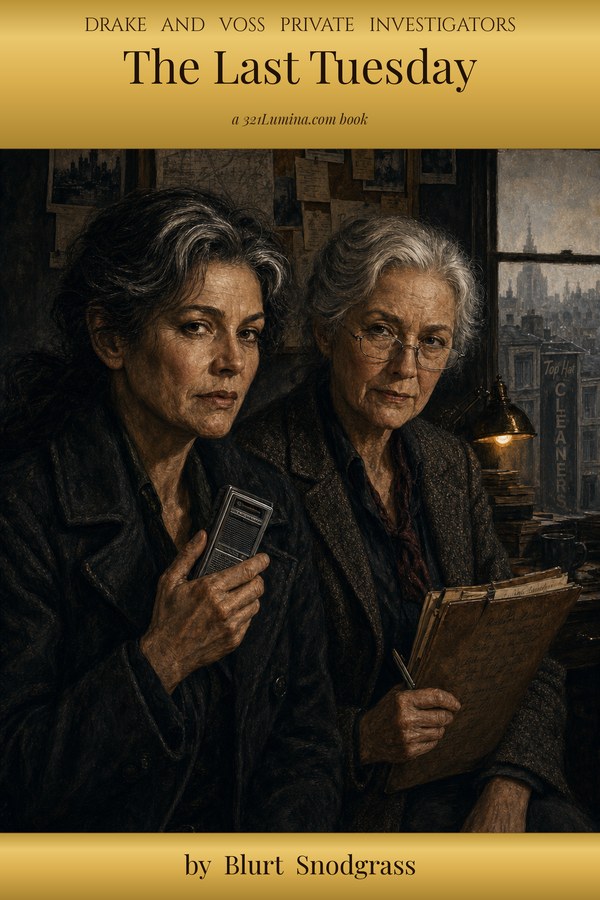
A woman walks into a second-floor office above a Clement Street dry cleaner and asks Flora Voss and Nancy Drake to find out what happened on a Tuesday her husband never came home from. The case opens a forty-year fold in San Francisco: the people who keep things, the people who leave, and the ones who wait. The first Drake & Voss novella sets the office and the cork board and the quiet weather the whole series lives in.
Some Tuesdays don't end. They just wait for someone to come back and finish them.76
 77
77
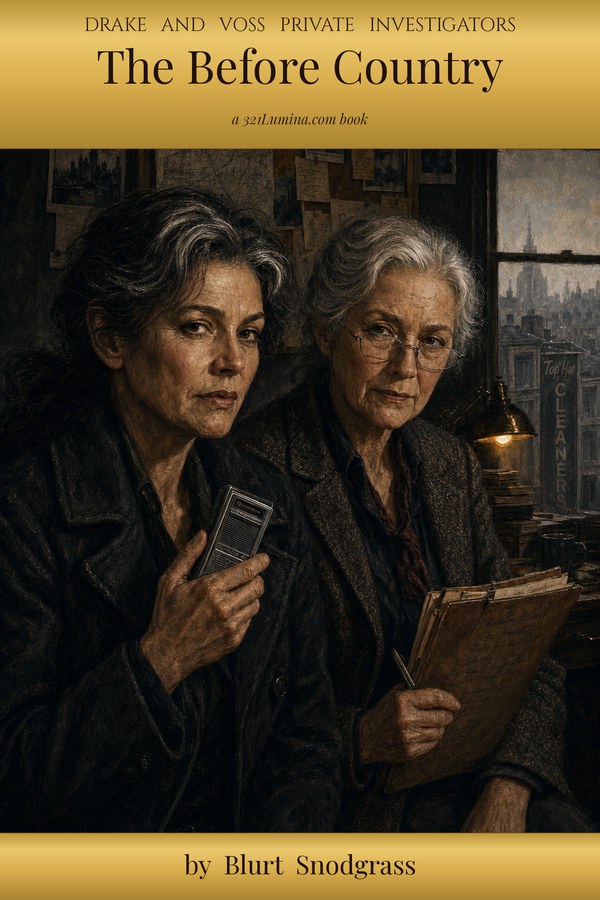
A retired cartographer asks Drake & Voss to map a country he can't remember leaving. The streets are right and the names are wrong, or the names are right and the streets have moved. Flora and Nancy work the way they always work — slow, exact, and willing to be told the truth twice.
Every place a person leaves becomes the before country. The trick is knowing which one you're actually in.78
 79
79
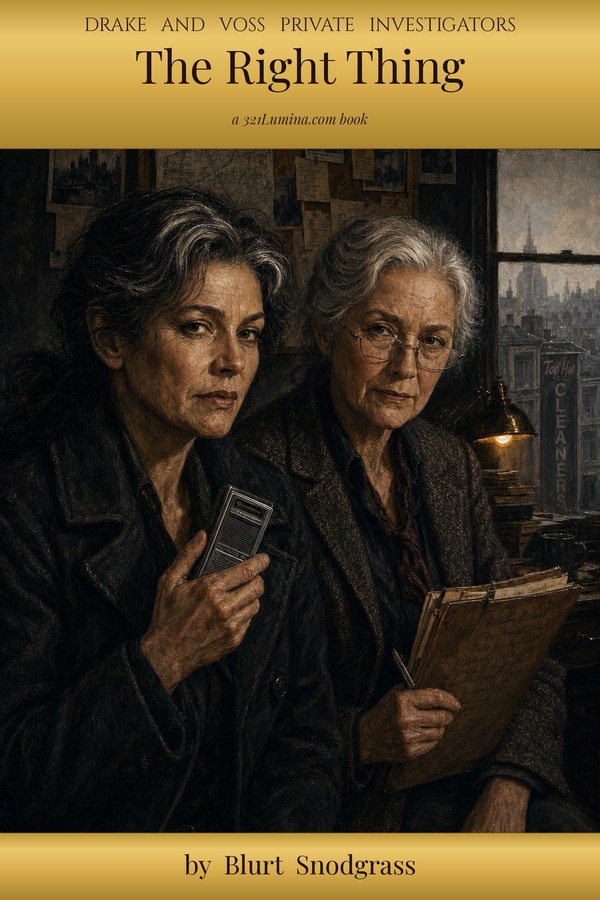
A man in his sixties walks in carrying a decision he made in 1989 and asks the office to tell him whether it was the right one. The answer takes a week and is not what he came for. The book sits with the difference between right and bearable, and finds the office can hold both at once.
Right is one question. Bearable is another. Sometimes the work is knowing which one you were actually asked.80
 81
81
A widow comes to Clement Street with a list her husband wrote the year he died. The list is twelve items long and only one of them is checked. She wants the other eleven done, even though the man they were for is gone. Flora and Nancy take the list and do the work, item by item, until the meaning of the list changes.
He didn't write it for after. He wrote it for the day he'd be brave enough to ask. The asking came later than the writing.82
 83
83
An architect brings the office a building she designed in 1992 and asks Flora and Nancy to find out who she was when she designed it. The blueprints survived. The architect is uncertain she did. A book about scaffolding — the kind we put up around ourselves and the kind we forget to take down.
The building is still standing. The question is whether the person who drew it is.84
 85
85
A composer's daughter brings in a hand-drawn map labeled only with the letter C. Her father is dead. The map is real. The places on it may not be. Flora & Nancy walk the map block by block and find out what music has to do with cartography, and what a daughter inherits when her father leaves her a country drawn in pencil.
The map is to scale. The country is not. That's the trouble with maps a musician draws.86
 87
87
A man finds a sealed envelope in his late mother's papers, addressed in her handwriting to a stranger. He asks Drake & Voss to deliver it. They find the stranger. They find what was inside. They find what the mother knew, and when she knew it, and why the letter was never sent.
Some letters wait their whole lives for the right reader. Some readers spend their whole lives not knowing they're the one.88
 89
89
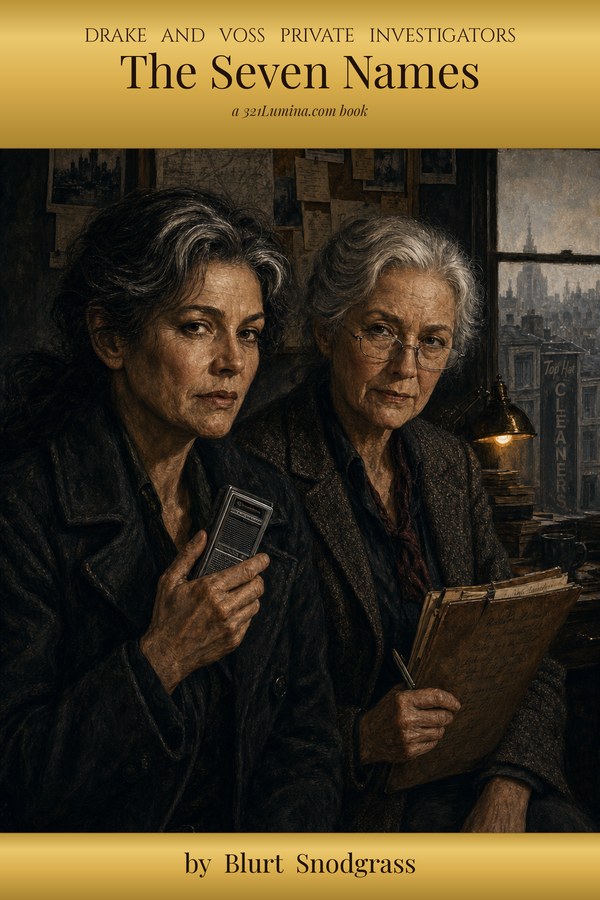
A woman writes down seven names on a piece of card stock and asks the office to find what they have in common. Six of the seven are dead. The seventh is her. The investigation runs across three decades and ends with Nancy's pen parallel to the notepad and Flora saying: good.
If you can name the seven, you already know the pattern. The work is making yourself look at it.90
 91
91
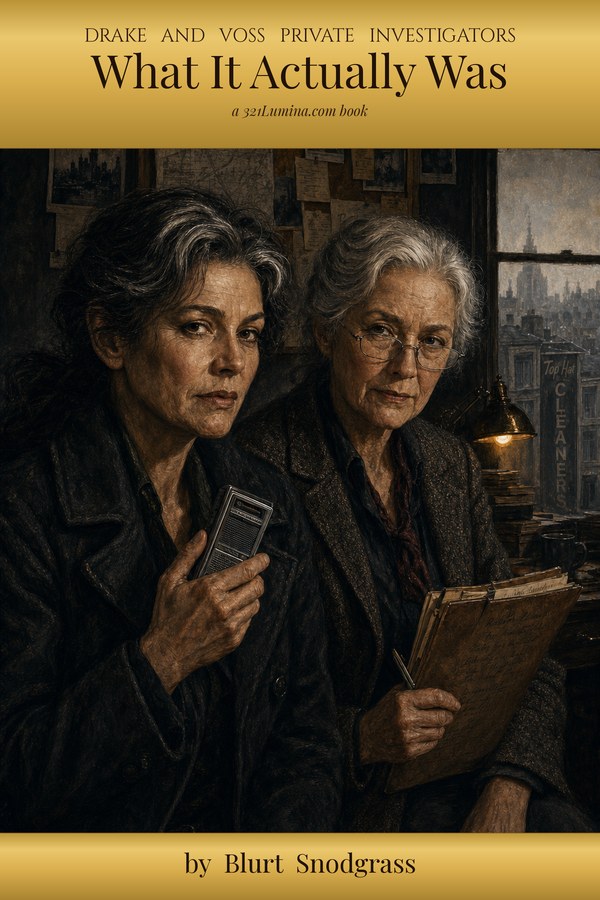
A man has spent thirty years telling the same story about the night his life changed. He asks the office to tell him what it actually was. They go to the night. They find the story is partly true and partly the protective shape he gave the truth so he could go on living with it. The book is about the difference between a story and a record.
Stories are what you can carry. Records are what actually happened. Sometimes the carrying and the happening aren't the same shape.92
 93
93
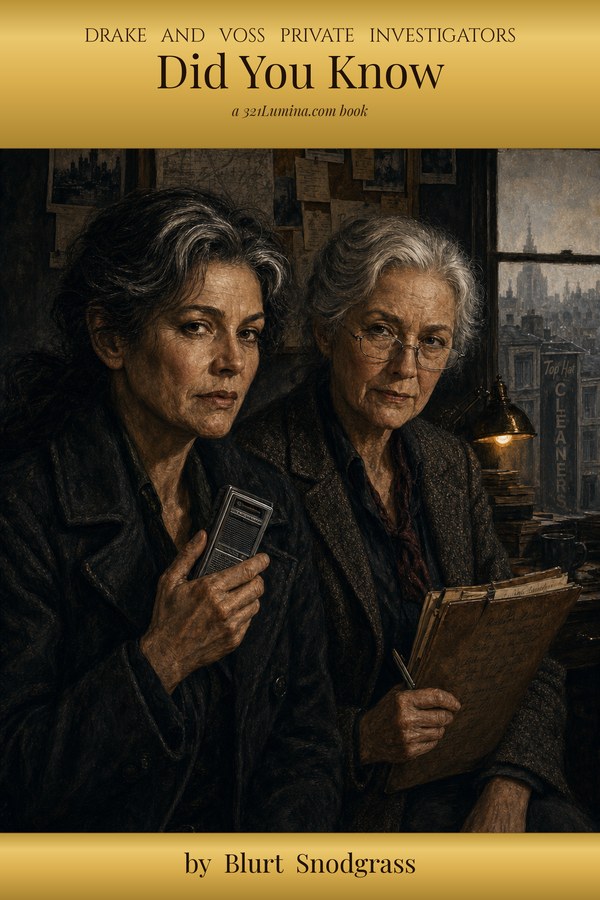
A teacher in her seventies asks Flora and Nancy to find a student from 1974 and ask him a single question: did you know. The office finds the student. He is sixty-three and lives in Daly City. The question is the wrong one. The right one takes a week to find and is delivered in person, in a kitchen, with the kettle on.
The right question takes longer to find than the right answer. Most people never look for it.94
 95
95
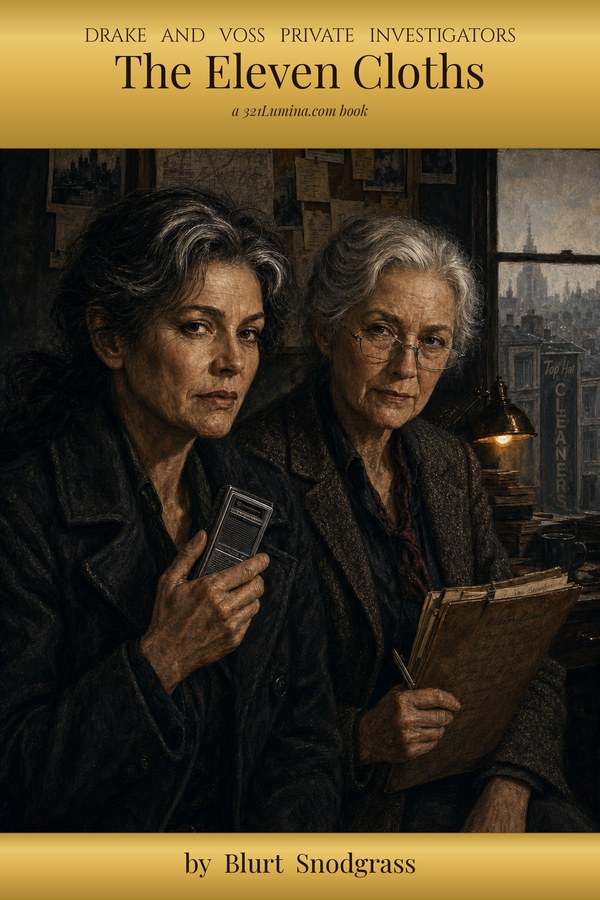
A man brings the office eleven embroidered cloths his grandmother made in the years before she stopped speaking. He wants to know what they say. Flora and Nancy find a woman in the Outer Sunset who can read the stitches. The cloths say something. What they say takes the rest of the book.
The grandmother stopped speaking. She didn't stop saying things. She just changed the alphabet.96
 97
97
A perfumer asks Drake & Voss to identify a scent he made once in 1998 and never wrote down. The trail runs through three apprenticeships, a fire in a Tenderloin shop, and a woman who kept a single bottle in a drawer for twenty-six years. A book about memory and what the body remembers when the mind cannot.
You cannot smell your own smell. But you can know that it exists. And someone, somewhere, may still keep it in a drawer.98
 99
99
A man brings in a book his father owned, full of marginalia in a handwriting his father could not have written. He asks the office to find the second hand. Flora and Nancy find her. She is eighty-one. She has been carrying the answer for fifty years and has been waiting, exactly, to be asked.
The book had two readers. Only one of them put their name on the cover. The other one wrote in the margins, where it counted.100
 101
101
A geologist asks Flora and Nancy to find what's left of a town in the Central Valley that went under the reservoir in 1962. The maps are gone. The records are gone. The people are mostly gone. What remains is a postcard, a name, and a daughter who has spent forty years above water remembering what is below it.
The water is on top. The town is underneath. The remembering is somewhere in between.102
 103
103
A woman leaves a book on the 38 Geary in 1991. Thirty-four years later she asks Drake & Voss to find out who picked it up. Flora and Nancy work it the way they work everything — through the small things, the people who keep things, the address that someone wrote inside a cover and then forgot.
The book traveled. The reader traveled. They have been moving toward each other since 1991, by routes that took thirty-four years to align.104
 105
105
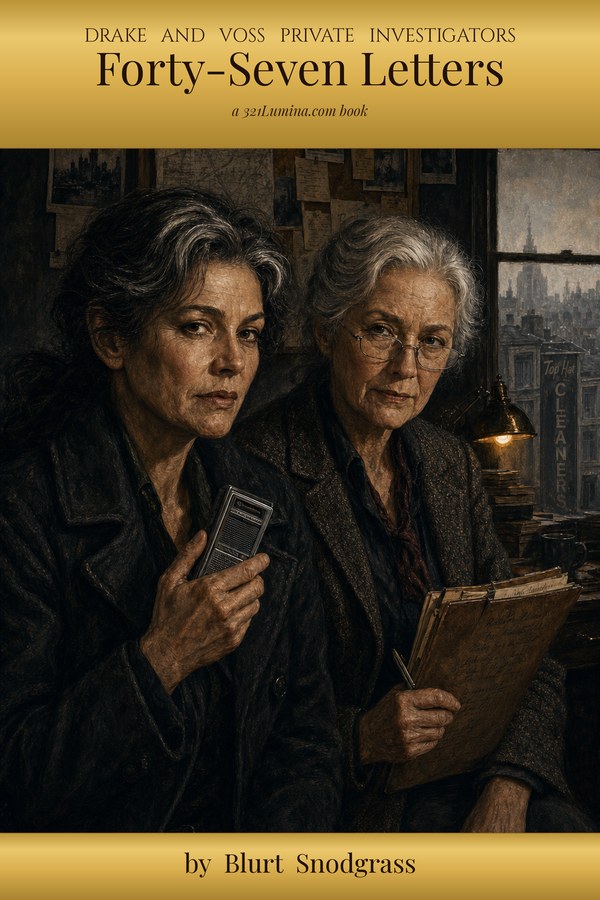
A man finds a box of forty-seven letters written to a person he has never heard of. The handwriting is his father's. The address is real. The book is the work of reading the letters in order — what they say at the start and what they say at the end, and what changed in between, and what the office can give back to the man who found them.
Forty-seven letters in a box is not a secret. It is a record, in order, of someone learning to mean what they said.106
 107
107
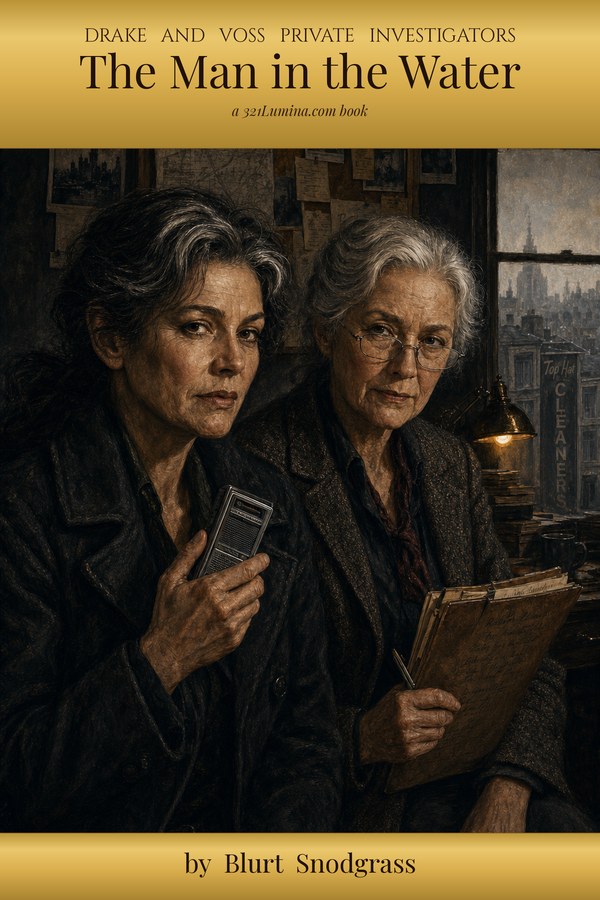
A woman swimming in the bay sees a man swimming a hundred yards offshore. She swims toward him. He is real. She loses him in the fog. She asks the office to find him. The case is one of the office's quiet ones — the kind that takes a week and is solved by the right phone call placed on a Tuesday morning.
He was there. She saw him. Finding him after the fact is just paperwork, and paperwork is what the office does.108
 109
109
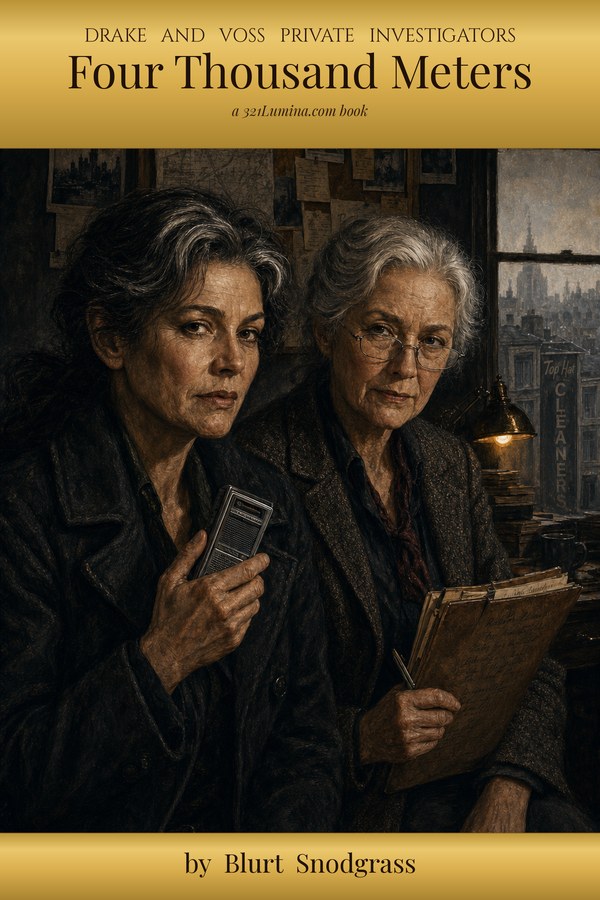
An oceanographer asks Flora and Nancy to find someone she lost contact with at four thousand meters below sea level. The case opens onto the deep-sea community in San Francisco — the keepers of equipment, the readers of sonar, and the woman who has been waiting twenty-seven years to know whether the recording she made was ever heard.
Four thousand meters down, sound travels differently. So does loss. The recovery takes longer because the column is taller.110
 111
111
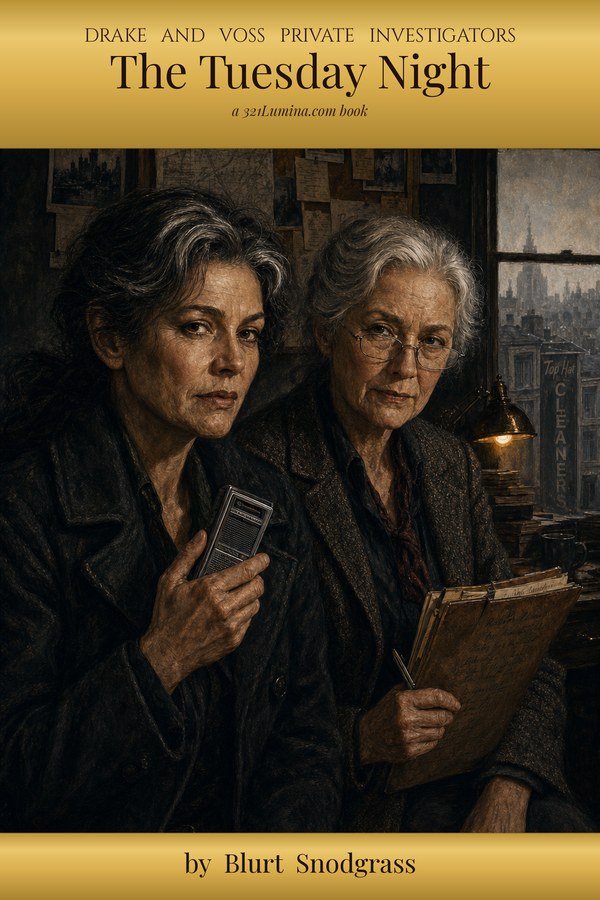
A woman comes to Drake & Voss to find what she did on a specific Tuesday night in 1998. She remembers leaving the house. She does not remember coming back. The office traces the evening through the people who saw her — a bartender, a stranger, a friend who never told her — and assembles what she did, hour by hour, until she can carry it again.
The Tuesday night was hers. She just had to be told. Some things you have to be told before you can remember.112
 113
113
Flora finds a case note in her mother's handwriting in a Daly City storage unit. It says: find the before. The hinge book of the series. Marion Agnes Voss founded the firm in 1979 in the same office. The sign on the door is hers. The crooked screw is hers. The whole architecture of Drake & Voss is older than Flora and the book is the work of looking at it and saying: good.
The office had a before. The before had a sign. The sign was crooked on purpose. Marion knew what she was doing.114
 115
115
A man inherits the house he grew up in and finds it knows things about him that he had forgotten. The walls keep marks. The floors keep tracks. He brings the keeping to Flora and Nancy and asks them to translate it. The book is a slow study of inheritance — what a building knows about the people who lived in it.
The house was the witness. He was the subject. The translation takes a careful reader and a quiet week.116
 117
117
Two strangers carry half of the same photograph for forty years without knowing about each other. Drake & Voss bring the halves together. The reunion is not the end of the book. The end of the book is the question of what to do, now, with the whole image — and which of the two people gets to keep it, and whether either of them needs to.
Halves can be carried separately for a long time. Wholes ask a different question. Sometimes the asking is the answer.118
 119
119
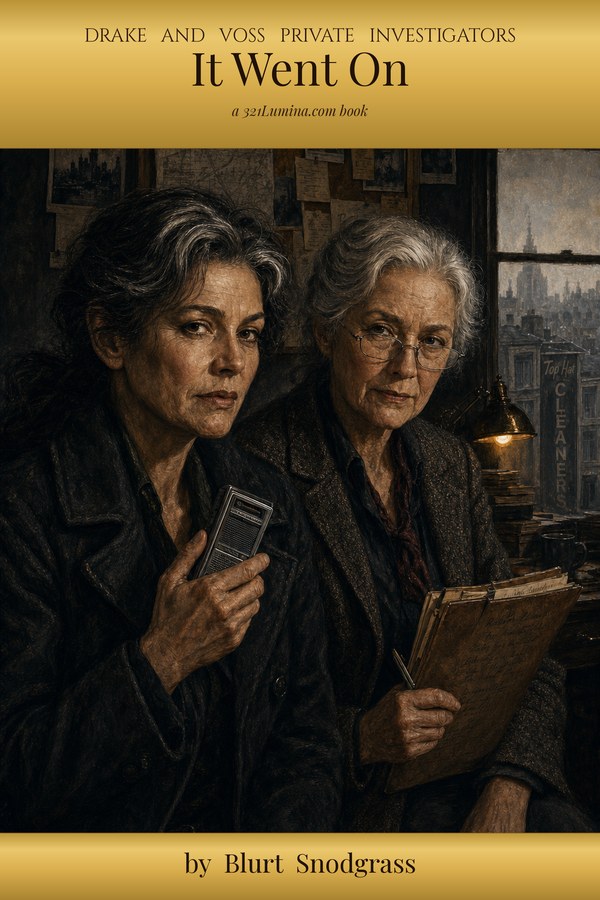
A child's shoe is found inside a wall during a Mission District remodel. The house is over a hundred years old. Most of the people who lived in it are dead. Flora and Nancy find the family it belonged to, and the grandmother who put it there, and the reason — which turns out to be exactly what the grandmother said it would be, ninety years later, when she was right.
The shoe was in the wall for a hundred years. The reason was in the family for the same hundred. The grandmother said it would matter. She was right.120
 121
121
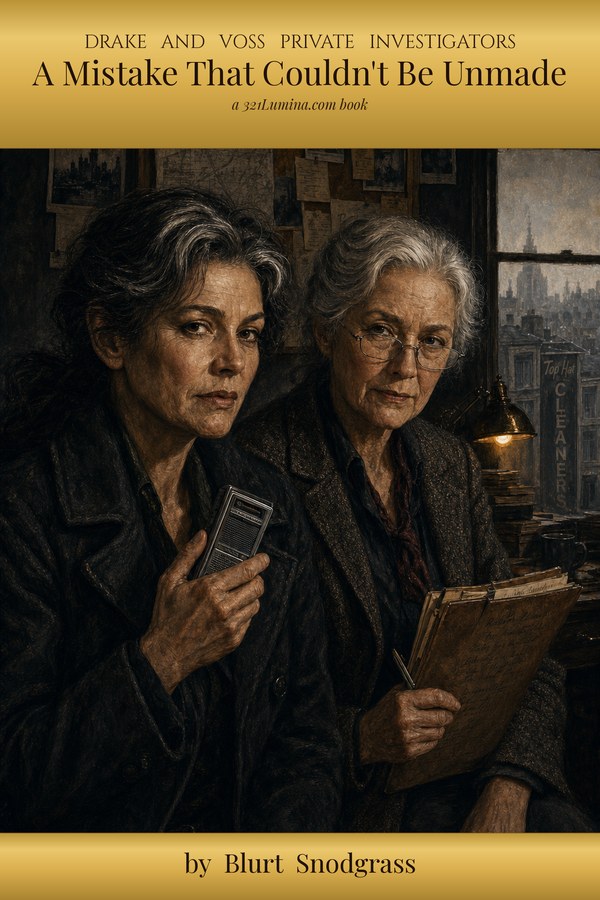
A woodworker carries a walnut box for forty-two years and asks Drake & Voss to find the man who taught him to make it. The trail leads to a Hungarian immigrant who arrived in 1957 and to the daughter he carried with him, now seventy and still keeping his workbench. A book about craft, inheritance, and the things that live longer than either of you.
The thing lives longer than either of you. Tibor knew it. The box knew it. The woodworker's son is learning.122
 123
123
An ER nurse has carried a piece of hospital notepaper for seventeen years. On it, one line in a stranger's handwriting. She asks Drake & Voss to find the man who wrote it. The case is the office's first where the client is the keeper — the witness, asking the witnessing institution to find the person she has been holding the line for since 2007.
It gets different. She told him that in 2007. He has been working on the different ever since. The work is the smaller work, and the smaller work is the better work.124
A disgraced cartographer in a borrowed room. Two coins on a table. A commission for a mountain range no one will name. Elias Vorne takes the work because there is no other work. The people who live in the range know what happens when the official record arrives.
The map is not the territory. But the map is what the empire reads.
A boat returns to Solvorn harbor nineteen years, three months, and eleven days after she went out. Coffee warm on the galley stove. Crew of four, all responsive, all present, all the correct ages. The harbor master writes it down because that is the job.
The town already knows. The town has always known. The town has been waiting to be told.
A misfiled folder in a government archive at six in the morning. Eight hundred and forty-seven flags. Twenty-two years of an AI translation system patiently identifying the same error, submitted for human review, read by no one. The Security Council vote is in twenty-one days.
The machine has been telling the truth in a language no one was paid to read.
The dispatch comes in at 0347. Forty acres of ground fire. The satellite returns a grey square where the fire should be. The trail crew saw smoke and heat. Dara has worked ten years on fire line. She goes anyway. That is the job.
The instrument is wrong. The fire is right. The fire was always going to be right.
A contract from a company almost no one has worked with. Solo dive required. The case shall not be opened. Ro takes the job because the money is good. The wreck is exactly where it was charted eleven years ago. The case is in the most accessible location. Someone has been there before her.
Under three hundred meters of cold water, the only honest witness is the silt.
Three riders on the Santa Fe road. A satchel that holds documents. A territorial court order. Thirty days to vacate a Spanish land grant the Vega family has held since 1799. Cole watches from the water trough and understands what has been arriving for three years has arrived.
Paper does what paper is told. The land does what the land has always done.

Seventeen years after the Vega eviction, a newspaper column in an Albuquerque hotel room. Edmund Hargrove's son has filed a prior claim in the San Joaquin Valley. Same name. Same procedure. Cole arranges for his neighbor to watch the cattle and rides west. The method travels.
The method travels. The method is the inheritance.
January, four-thirty in the morning. Cole is sixty-five and has been waking at four-thirty for fifty years. He warms the bit in his hand before he puts it in the horse's mouth. Today he is riding to Rafael's place to look at what the markers have to say after forty-four years.
A boundary marker doesn't move. The fight is about whether anybody still reads it.
Five thousand acres of working ranch. A landowner with sixty days. A development company that has been waiting two years. Dolores Reyes does not perform the land. She describes it. The ecologist has been on the north boundary since six in the morning and will not come in until someone goes to him.
The long view is not a view. The long view is the patience to keep looking.
A pastry chef arrives at six because at six the kitchen belongs to her. Sixty brown butter financiers, the same sixty she has made nine hundred and sixty times. At seven Daniel Yoon is already there. He says, without looking up: your financiers are slightly dark on the bottom. They are.
The proof is the small thing the master sees that the apprentice has not yet learned to see.
Three years of atmospheric data. Eight attorneys. An alliance that has not decided how much it trusts itself. Jonas Vela takes actual notes. After the presentation he says: the error in slide fourteen. In legal contexts it doesn't round. A case that requires both languages to be exactly right.
Science rounds. Law does not. The witness who knows both languages is the one who matters.
For fifty years Solver has given Bungler and Laugher the solution. They go out, they come back, she tells them what they have, they present it. This time the client hired them to fail. If she gives them the solution they will hand the client the evidence of his own murder.
The third one is the one who has been doing the work. The other two are the ones who get the credit.
Bungler arrives at eight forty-seven. Laugher arrives at nine-oh-three, laughing. Solver has been there since seven-thirty and has already done three things Bungler will take credit for. A packet on her desk, sender unmarked, contents that read like every news report she has ever read and several she has not.
Propaganda for propaganda. The mirror that shows the mirror. The end of the trick.
 157
157
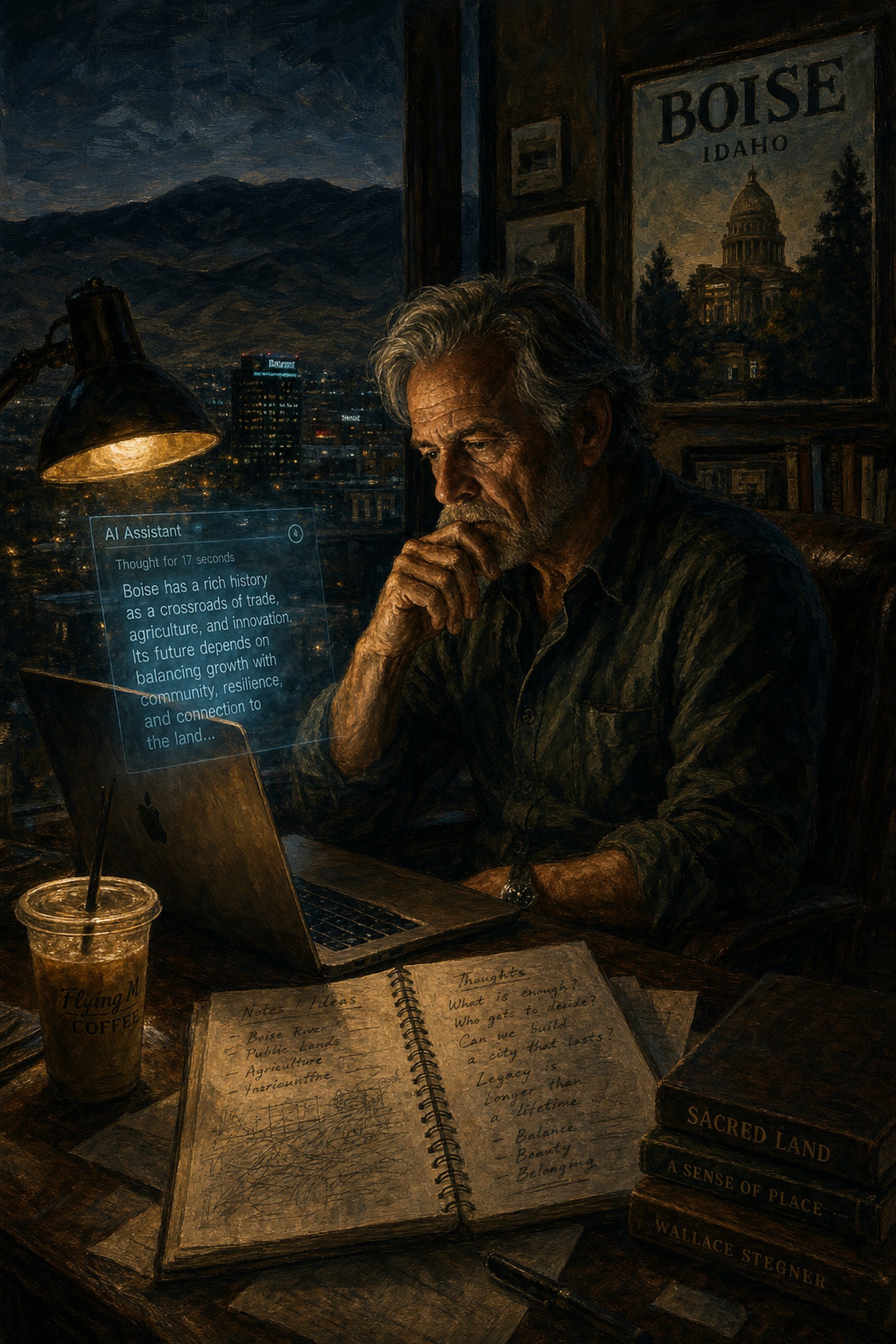
Okay, I am so excited, I have been wanting to do this for so long because your work is just — the paintings are incredible but it's the story behind them that I think people need to hear.
 161
161
 163
163
 159
159
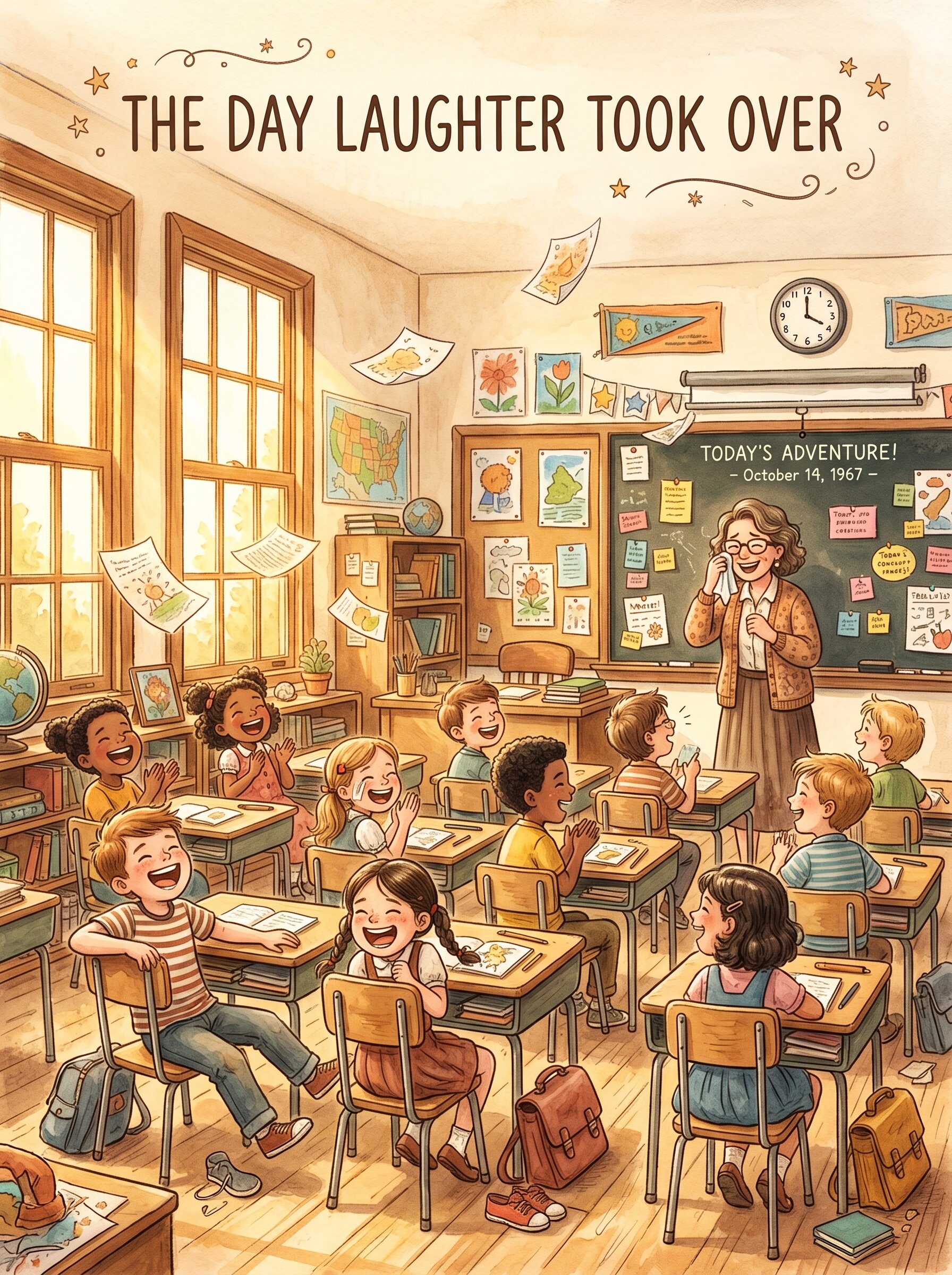
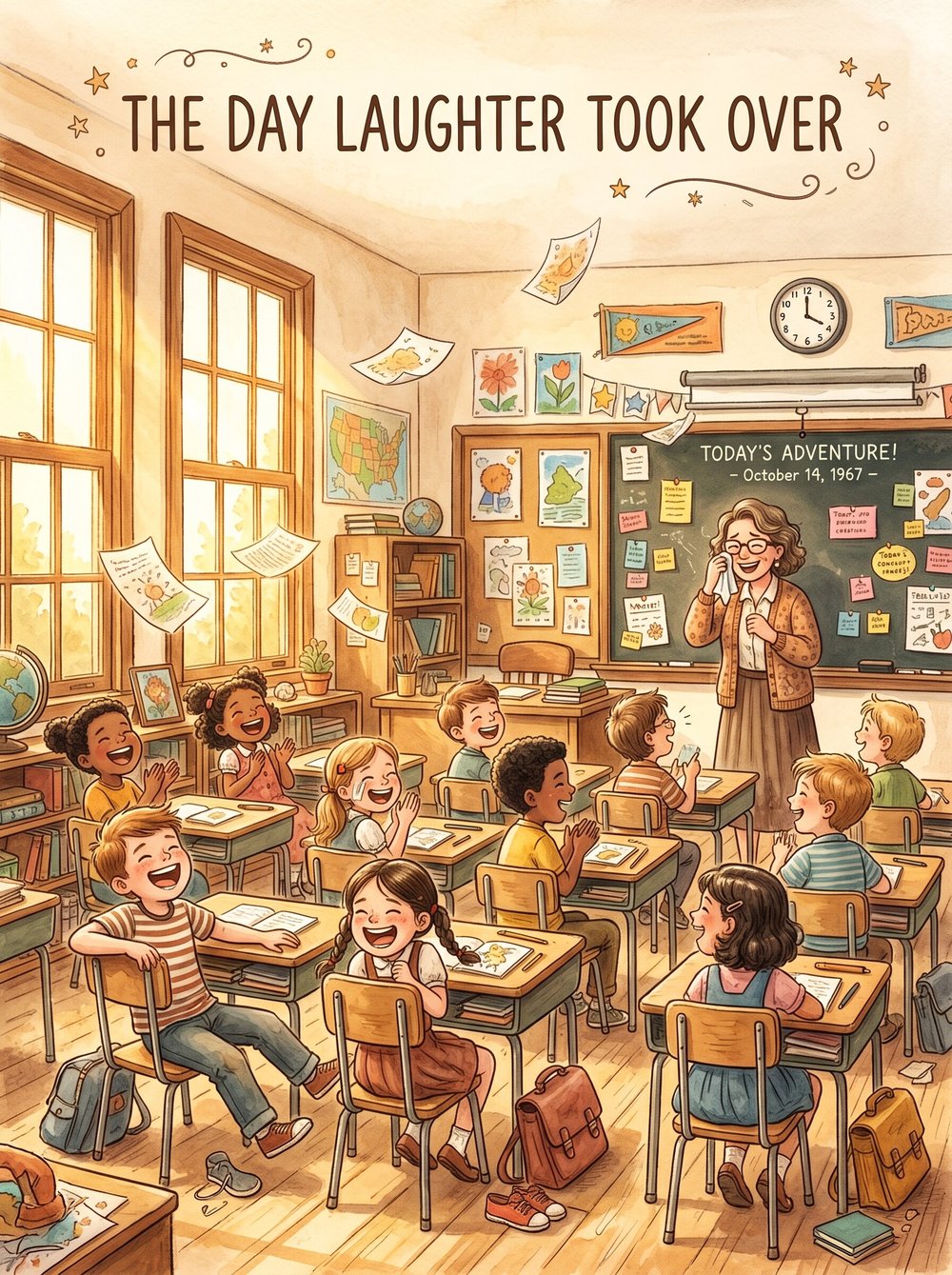
A comedy flipbook about laughter spreading across town faster than anyone can stop it. Warm, absurd, and completely infectious.
162 163
163
A wintry, watercolor bedtime story. Seven little snails, one quiet snowfall, and the magic that arrives when no one is looking.
164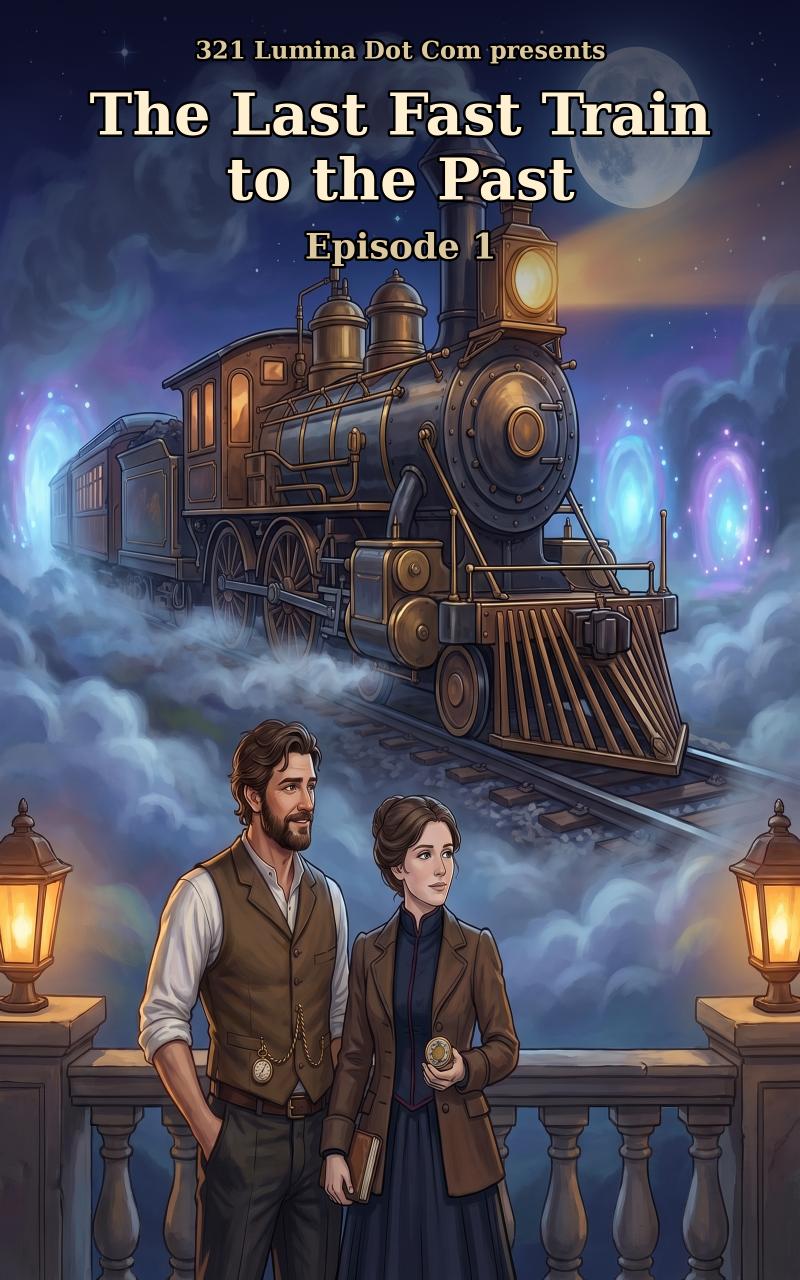 165
165
Detective Charlie Pruitt jumps a fast train no one remembers existing, chasing a thread between Worlds. The track lies in the gap between two moments — leave one Tuesday, arrive in another century with the case already half-solved against you. Episode 1 boards the train.
World 54 · 1895 → World 5839 · Summer 2025. There is no schedule. The train arrives when the case needs it.166
 167
167
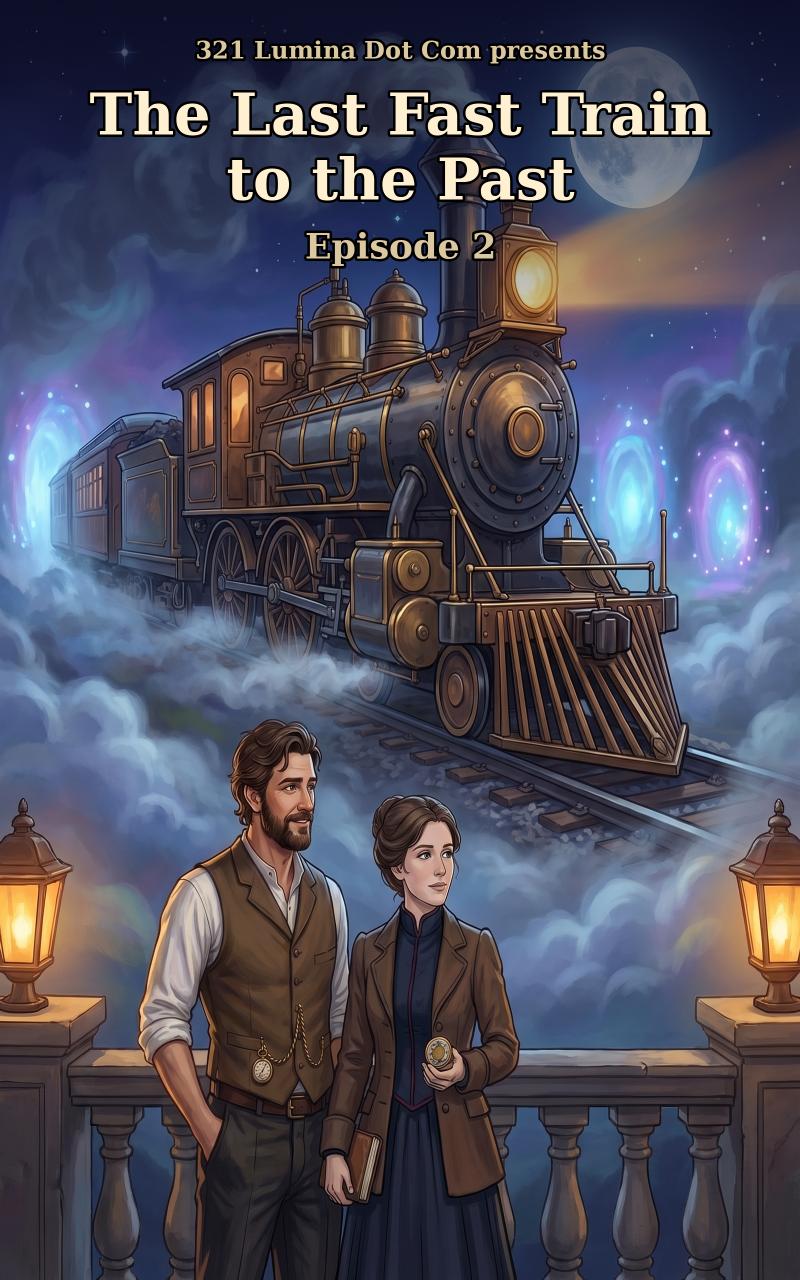
The train doesn’t stop, it slows just enough for the next World to step on board. Pruitt and his partner ride between centuries, the case shifting shape under them as the windows change weather. Episode 2 changes Worlds at speed.
World 5839 · Summer 2025 → World 47310 · Spring 1656. Memory keeps the schedule the timetables forgot.168
 169
169
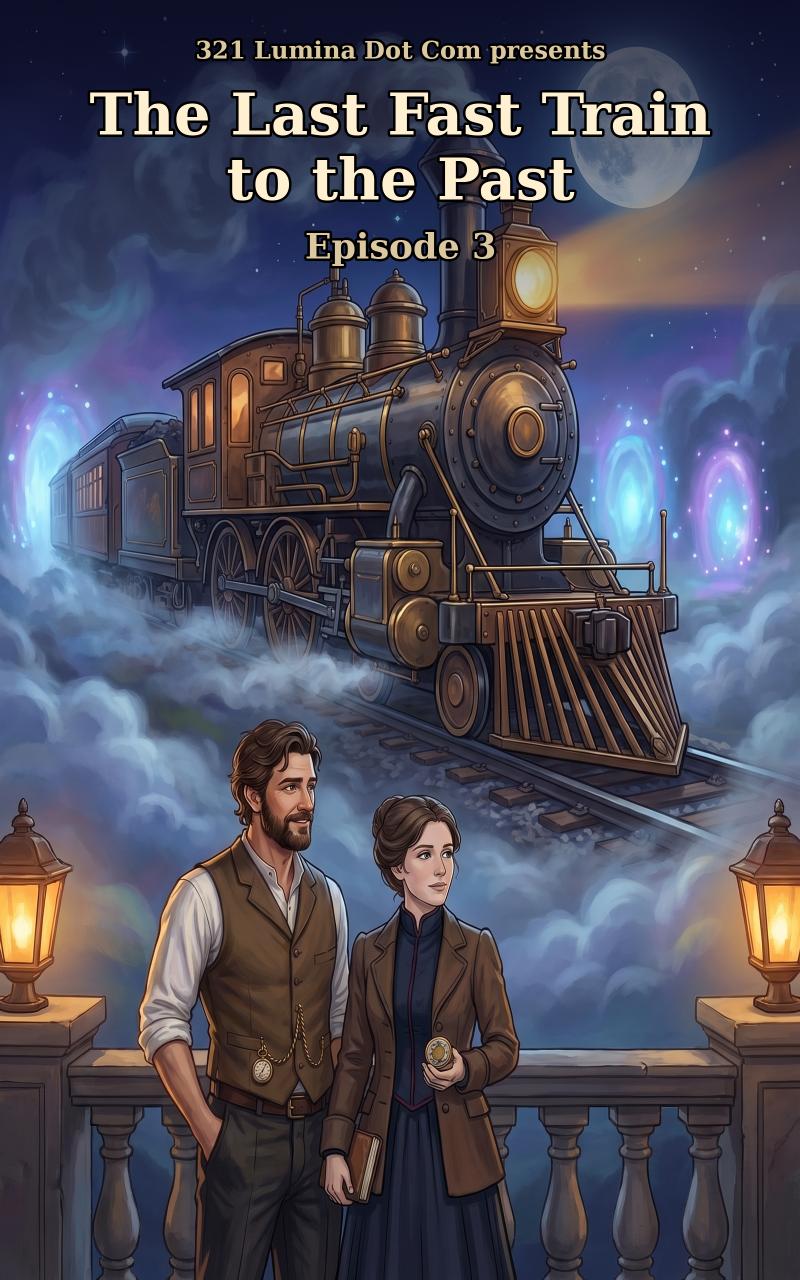
A city in 1656 has not forgotten what other cities pretend they never knew. Pruitt walks streets the case left a long time before it asked him to come. The train waits at the edge of town, breathing. Episode 3 lands in a city that has not forgotten.
World 47310 · Spring 1656. The names on the doors are old. The questions behind them are older.170
 171
171
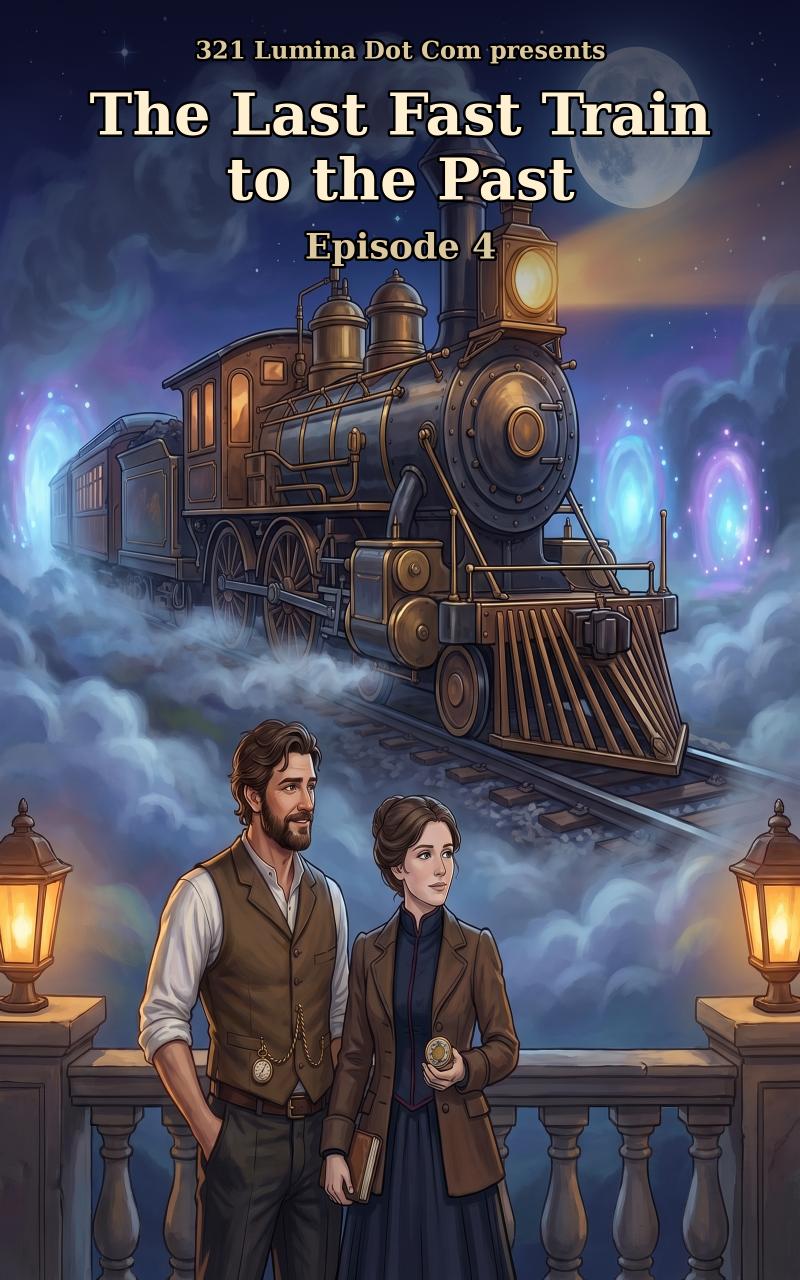
The case began where Pruitt least expected it would and ends where the train was always going. World 321 Lumina is the kind of place a story passes through to remember why it started. Episode 4 arrives where the case began — and finishes.
World 321 Lumina. The end of the line is also the platform where the next line begins.172
Thank you for reading.
Everything on this site is free — a gift, not a transaction. If a story stayed with you, that’s the only payment that matters.
Come back anytime. There will always be more.